Chemistry M.Sc.
Key Data
| Type of Study Full-time |
Standard Duration of Studies 4 Semesters (Full-time) |
Credits 120 ECTS |
| Language of Instruction English |
Start of Degree Program Winter Semester |
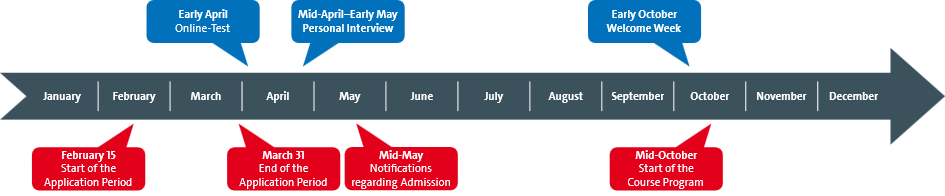
Application Period February 15 – March 31 |
| Main Location Hamburg |
Costs |
|
Information on Degree Program
The master’s program in Chemistry at the University of Hamburg is a two-year, research-oriented, English-taught program designed specifically for international students. The program covers a wide range of chemistry disciplines, including inorganic, organic, physical, theoretical, technical, and macromolecular chemistry. It provides students with comprehensive theoretical knowledge and practical skills across all major areas of chemistry, culminating in an independent research project that prepares graduates for careers in research, industry, or further academic pursuits.
Applicants are typically graduates of a traditional chemistry bachelor’s program and are expected to have a solid foundation in inorganic, organic, and physical chemistry. Extensive laboratory experience is also required to ensure students are well-prepared for the coursework of the master’s program.
The program is divided into three phases: an introductory phase, an advanced phase, and a master's thesis.
Introductory Phase
The program begins with an introductory phase lasting one semester, during which the students receive extensive instruction in inorganic, organic, physical, macromolecular and technical, theoretical chemistry, as well as spectroscopy (basic modules). These lectures aim to establish a strong conceptual understanding. Complementing the lectures, students participate in an advanced laboratory course focusing on inorganic, organic, physical, as well as macromolecular and technical chemistry, which comprises more than 250 hours of hands-on lab work. This laboratory work takes place during the first and second semesters.
Advanced Phase
Following the introductory phase, students enter the advanced phase of the program, during which they can deepen their knowledge by selecting modules covering a broad spectrum of chemistry-related topics. These modules enable students to tailor their studies according to their individual interests and career goals. All modules are research-oriented, allowing students to actively engage with current research topics through both theoretical coursework and laboratory work.
Master’s Thesis
The program concludes with a six-month master's thesis, during which students undertake an independent research project in a subject area of their choice. The thesis is completed with a colloquium, where students present and defend their research findings. This research experience provides valuable skills in scientific investigation, academic writing, and presentation, preparing students for future research or professional careers in chemistry.

Basic Modules
Five of the following six basic modules must be successfully completed:
- Inorganic Chemistry
- Organic Chemistry
- Physical Chemistry
- Spectroscopy
- Technical and Macromolecular Chemistry
- Quantum Chemistry
Advanced Modules
Modules totaling 36 credit points must be successfully completed. These modules cover the following topics:
- Nanochemistry
- Regenerative Energy Conversion
- Energy
- Reaction Engineering
- Synthetic and Material Properties Polymer Chemistry
- Bioorganic-Analytical Methods
- Natural Product Chemistry
- Advanced Organic Synthesis
- Modern Molecular Chemistry
- Crystal Structure Analysis
- Catalysis
- HighTech Polymer Chemistry
- Quantum Chemistry
- Electronic Transport in Molecules and Nanoscopic Systems
- Soft (Nano-)Matter
- Time-resolved Spectroscopy of Nanomaterials
- Nanomaterials in Optics, Electronics, and Sensors
- Introduction to Membrane Technology
- Water in Special Environments
- Sustainable Production of Platform Chemicals
- Power-to-X-Technologies
- Biohybrid Nanostructures
Research Project
In this module, students independently conduct a research project within a few weeks in one of the scientific research groups. This module serves as preparation for the subsequent master's thesis.
Elective Area
Modules totaling 6 credit points must be successfully completed. These modules can be chosen from the full range of courses offered at the University of Hamburg, including language courses. However, it is possible to select further chemistry-related courses from the list of advanced modules.
Application Procedure
Application Process Timeline
Reasons to Study Chemistry at the University of Hamburg
-
Largest and most research-intensive university in northern Germany
-
Recognized as a University of Excellence for outstanding research and teaching quality
-
Opportunities for interdisciplinary research and specializations within chemistry
-
State-of-the-art laboratories and facilities
-
Close proximity to leading research institutions, such as DESY (Deutsches Elektronen-Synchrotron)
-
Free libraries, language courses, and public transport
-
Affordable student canteens and dormitories
-
Vibrant cultural and social life in the city of Hamburg