Department of Chemistry
Departmentof Chemistry
Photo: FB Chemie/Ehrlich
16 March 2026

Photo: FB Chemie
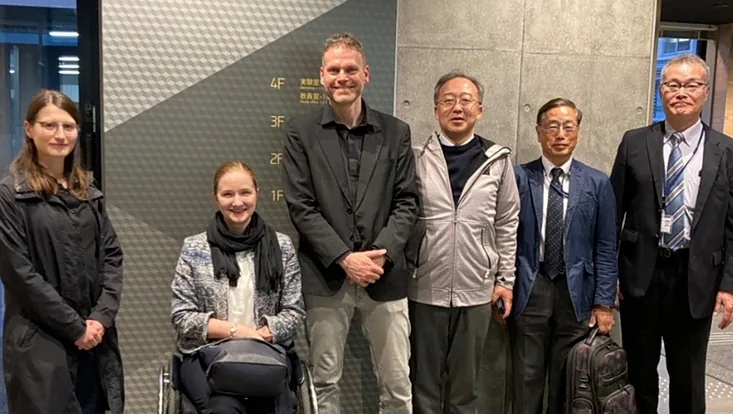
On 25–26 February 2026, the BioValCat ERC Symposium took place at the Department of Chemistry of the University of Hamburg. The event was organized by the research group of Prof. Dr.-Ing. Jakob Albert at the Institute of Technical and Macromolecular Chemistry as part of the ERC Consolidator Grant project BioValCat – Enhanced Biomass Valorisation by Engineering of Polyoxometalate Catalysts.
The BioValCat project aims to develop new catalytic processes for the efficient conversion of renewable biomass into valuable chemicals. In particular, the project focuses on designing and understanding polyoxometalate-based homogeneous catalysts for selective oxidation reactions that enable sustainable pathways to platform molecules such as formic acid and other valuable products. By combining catalyst development, mechanistic studies, reaction engineering, and process modelling, the project seeks to advance biomass valorisation technologies toward industrially relevant applications.
The two-day symposium brought together international experts and collaborators working in the fields of catalysis, reaction engineering, and sustainable chemistry. The scientific program featured plenary lectures by Prof. Jason Hallett (Imperial College London), Prof. Anders Riisager (Technical University of Denmark), and Prof. Sébastien Floquet (Université de Versailles Saint-Quentin-en-Yvelines), who presented recent developments in sustainable catalysis, biomass conversion, and polyoxometalate chemistry.
In addition to the plenary lectures, the program included scientific presentations by invited speakers and collaborators, including Dr. Maximilian Poller (University of Hamburg), Prof. Jerrik Mielby (Technical University of Denmark), Dr. Mohamed Haouas (Université de Versailles Saint-Quentin-en-Yvelines), Prof. Dr. David Robinson (Nottingham Trent University), Dr. Sonja Mürtz (RWTH Aachen), Jun.-Prof. Dr. Anna Beine (University of Siegen), Prof. Dr. Matthias Stein (Max Planck Institute for Dynamics of Complex Technical Systems), and Prof. Dr. Christoph Held (TU Dortmund University).
Several poster sessions provided opportunities for early-career researchers to present their work and engage in discussions with the participants. The poster award was presented to Elisabeth Hundt (University of Hamburg) for her contribution entitled “Molecular Polyoxometalate Catalysis for Selective Biomass Valorisation to Lactic Acid.”
Beyond the scientific program, participants also had the opportunity to visit the laboratories of the Albert research group and to exchange ideas during informal networking events. The symposium provided a platform for scientific discussion and strengthened international collaborations in the field of catalytic biomass valorisation.
Further information and updates on the BioValCat project, including recent research activities, are shared on the project’s LinkedIn page.
The organizers would like to thank all speakers and participants for two days of inspiring discussions and valuable scientific exchange.